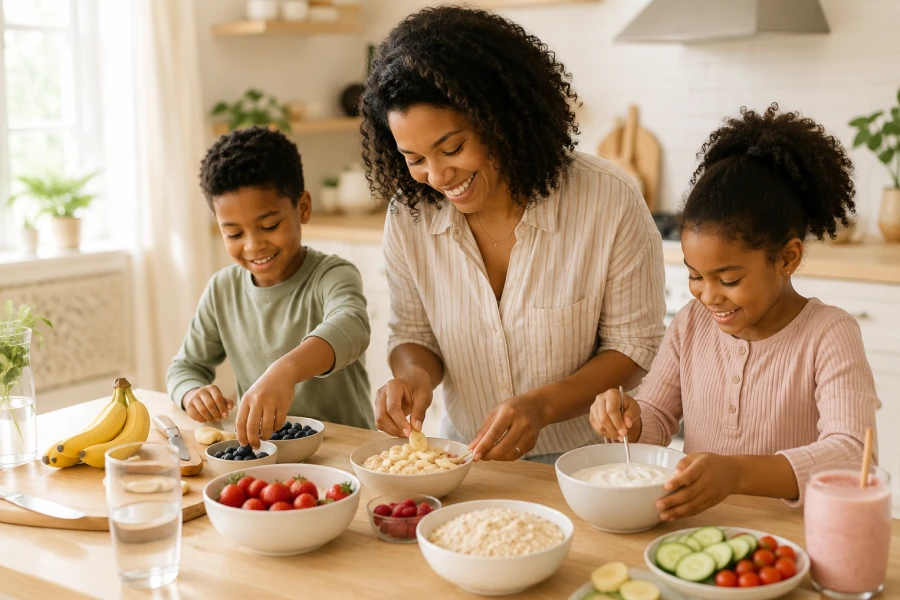
A well-stocked kitchen removes dozens of rushed decisions before hunger becomes urgent. Although healthy eating habits for families can sound strict or expensive, it works best when the environment makes nourishing choices easier. Many parents balancing work find that school, errands, and changing appetites, nutrition often becomes another demanding project instead of a supportive household rhythm. Small choices matter because children learn from what appears regularly, not from occasional nutrition lectures. A workable system must reduce friction at breakfast, lunch, dinner, and snack time. It must also leave room for pleasure, flexibility, and familiar family favorites. Repeated consistently, those choices balanced choices begin feeling ordinary rather than exceptional. The article covers shopping, preparation, modeling, hydration, and calmer shared meals. A useful household pattern can be imperfect and still remain dependable. Success means a realistic system that supports health without turning food into a daily argument.
Notice first that the kitchen quietly shapes what everyone eats when time feels scarce. The environment starts working against the family when the easiest visible foods are often highly processed or require no preparation. A low-friction response is placing fruit, yogurt, cut vegetables, eggs, beans, and whole grains within easy reach. In an ordinary kitchen, a clear shelf for breakfast basics can make school mornings noticeably calmer, an approach supported by healthy family meals. Once that shift is in place, better options become convenient instead of aspirational. Parents can test the kitchen setup during one weekday before expanding the change. The useful measure is whether the family needs fewer prompts at the next meal. Taste, budget, and culture can reshape the kitchen setup without weakening the principle. One difficult plate does not erase the pattern created across several days. The kitchen setup succeeds when it feels familiar rather than performative.
In an ordinary kitchen, three dependable dinner formulas often work better than twenty saved recipes. Notice first that decision fatigue can undermine good intentions long before dinner. A low-friction response is creating a short rotation of reliable breakfasts, lunches, dinners, and snacks. Once that shift is in place, planning feels lighter while variety still appears across the week. The environment starts working against the family when parents repeatedly invent meals from scratch after already making hundreds of choices. Parents can test visible food choices during one weekday before expanding the change. The useful measure is whether the family needs fewer prompts at the next meal. Taste, budget, and culture can reshape visible food choices without weakening the principle. One difficult plate does not erase the pattern created across several days. Visible food choices succeeds when it feels familiar rather than performative.
Notice first that a useful pantry supports ordinary evenings, not imaginary perfect ones. A low-friction response is choosing flexible staples that combine quickly with fresh or frozen produce. The environment starts working against the family when families sometimes buy specialty ingredients that never become complete meals. Once that shift is in place, less food is wasted and last-minute takeout becomes less automatic. In an ordinary kitchen, beans, rice, pasta, oats, canned fish, and frozen vegetables create many combinations, an approach supported by nutritious pantry staples. Parents can test decision load during one weekday before expanding the change. The useful measure is whether the family needs fewer prompts at the next meal. Taste, budget, and culture can reshape decision load without weakening the principle. One difficult plate does not erase the pattern created across several days. Decision load succeeds when it feels familiar rather than performative.
Notice first that children notice adult behavior more closely than adults often realize. The environment starts working against the family when messages about health lose credibility when grown-ups skip meals or criticize foods. A low-friction response is eating regular meals and describing food with neutral, practical language. In an ordinary kitchen, a parent enjoying vegetables without bargaining sends a strong everyday message. Once that shift is in place, curiosity can replace pressure around unfamiliar tastes. Parents can test parental modeling during one weekday before expanding the change. The useful measure is whether the family needs fewer prompts at the next meal. Taste, budget, and culture can reshape parental modeling without weakening the principle. One difficult plate does not erase the pattern created across several days. Parental modeling succeeds when it feels familiar rather than performative.
In an ordinary kitchen, apple slices with peanut butter feel satisfying without requiring elaborate preparation, an approach supported by healthy snack swaps. Notice first that snacks can bridge energy gaps without replacing the next meal. A low-friction response is pairing produce or whole grains with protein and serving water routinely. Once that shift is in place, children receive steadier energy and clearer boundaries. The environment starts working against the family when grazing from large packages makes hunger cues harder to notice. Parents can test snack balance during one weekday before expanding the change. The useful measure is whether the family needs fewer prompts at the next meal. Taste, budget, and culture can reshape snack balance without weakening the principle. One difficult plate does not erase the pattern created across several days. Snack balance succeeds when it feels familiar rather than performative.
Notice first that flexibility protects progress when schedules, budgets, and preferences shift. A low-friction response is looking at patterns across days rather than judging every plate. The environment starts working against the family when rigid rules can make one unusual meal feel like failure. Once that shift is in place, parents can adjust calmly while children maintain a positive relationship with food. In an ordinary kitchen, pizza night can coexist comfortably with vegetables, fruit, water, and shared conversation. Parents can test flexible patterns during one weekday before expanding the change. The useful measure is whether the family needs fewer prompts at the next meal. Taste, budget, and culture can reshape flexible patterns without weakening the principle. One difficult plate does not erase the pattern created across several days. Flexible patterns succeeds when it feels familiar rather than performative.


Leave a comment