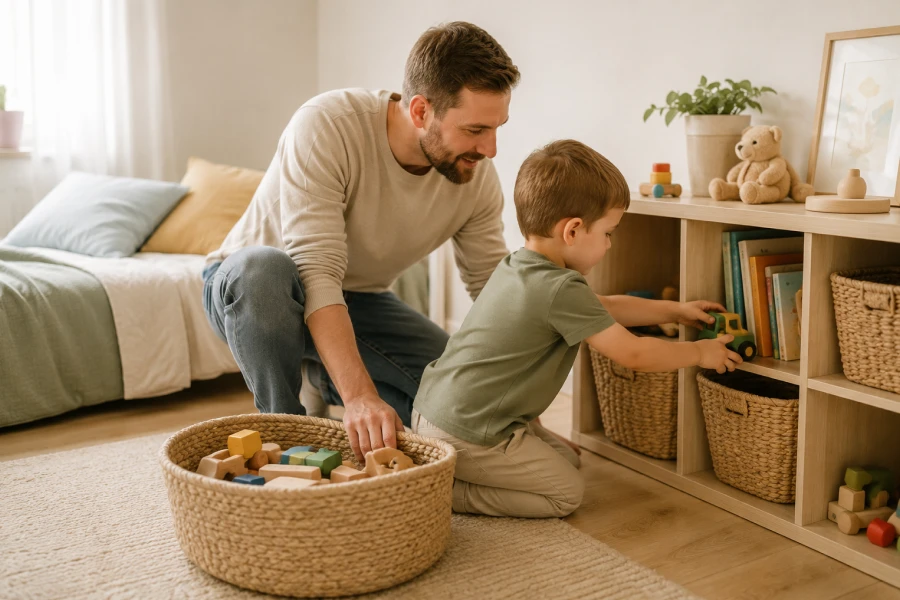
A child’s first household jobs should create belonging rather than prove competence. Although age appropriate chores for kids can sound a fixed list determined only by birthdays, it works best when responsibility grows when tasks match current skills. Small choices matter because children participate more confidently when success feels possible. Many parents who want children to contribute without assigning overwhelming tasks find that age charts can distract from readiness, practice, and available support. A workable system must teach practical abilities in manageable stages. Repeated consistently, those choices contribution becomes part of family identity instead of an occasional punishment. It must also reduce conflict by making expectations clearer. The article covers readiness, task size, teaching, supervision, feedback, and gradual independence. Developmental fit matters more than matching another child’s chore chart. Success means a fair progression that respects development and builds useful confidence.
Readiness becomes visible in small moments because readiness includes attention, coordination, understanding, and emotional regulation. A simple household example is that a child who carries a plate safely may be ready to clear the table, an approach supported by age based chore ideas. The task is likely too large when two children of the same age may need very different levels of support. The next teachable step is observing what the child can already do during everyday routines. Children gain confidence because parents choose a useful stretch instead of an impossible demand. Observe readiness for several attempts before raising the expectation. The child needs enough challenge to learn without losing the path to success. Parents can reduce support gradually as readiness becomes more dependable. A slower result may still show stronger understanding and ownership. Readiness should grow through practice rather than arrive as a surprise demand.
The task is likely too large when large instructions such as clean your room contain many hidden steps. Readiness becomes visible in small moments because small jobs create faster practice cycles and clearer feedback. The next teachable step is assigning one visible action with a defined finish. Children gain confidence because the child can recognize success without repeated correction. A simple household example is that putting books on one shelf is clearer than organizing an entire bedroom. Observe small tasks for several attempts before raising the expectation. The child needs enough challenge to learn without losing the path to success. Parents can reduce support gradually as small tasks becomes more dependable. A slower result may still show stronger understanding and ownership. Small tasks should grow through practice rather than arrive as a surprise demand.
The next teachable step is showing the task, practicing together, and gradually stepping back. Children gain confidence because responsibility grows alongside actual competence. Readiness becomes visible in small moments because household tasks contain techniques adults perform without conscious thought. The task is likely too large when children may be blamed for carelessness when nobody demonstrated the process. A simple household example is that folding one towel together can teach more than a long verbal explanation, an approach supported by child readiness for chores. Observe guided practice for several attempts before raising the expectation. The child needs enough challenge to learn without losing the path to success. Parents can reduce support gradually as guided practice becomes more dependable. A slower result may still show stronger understanding and ownership. Guided practice should grow through practice rather than arrive as a surprise demand.
Readiness becomes visible in small moments because the best chore often connects naturally to routines already happening. A simple household example is that placing shoes away after entering the house can become nearly automatic. The task is likely too large when random assignments are easier to forget and harder to repeat. The next teachable step is linking a job to meals, bedtime, school arrival, or pet care. Children gain confidence because memory receives a reliable cue and the task gains practical meaning. Observe routine anchors for several attempts before raising the expectation. The child needs enough challenge to learn without losing the path to success. Parents can reduce support gradually as routine anchors becomes more dependable. A slower result may still show stronger understanding and ownership. Routine anchors should grow through practice rather than arrive as a surprise demand.
The task is likely too large when parents often redo a task immediately and accidentally erase ownership. Readiness becomes visible in small moments because learning produces slower work and uneven quality at first. The next teachable step is correcting only safety issues while allowing reasonable imperfection. Children gain confidence because children see that their contribution genuinely counts. A simple household example is that a wrinkled towel can remain folded when the basic job was completed, an approach supported by family contribution habits. Observe imperfect results for several attempts before raising the expectation. The child needs enough challenge to learn without losing the path to success. Parents can reduce support gradually as imperfect results becomes more dependable. A slower result may still show stronger understanding and ownership. Imperfect results should grow through practice rather than arrive as a surprise demand.
The next teachable step is adding one step, less supervision, or a related responsibility. Children gain confidence because the child experiences visible progress without sudden overload. Readiness becomes visible in small moments because responsibility should expand gradually as skills become dependable. The task is likely too large when keeping the same tiny task forever can feel meaningless or patronizing. A simple household example is that clearing a plate can eventually grow into loading part of the dishwasher. Observe gradual growth for several attempts before raising the expectation. The child needs enough challenge to learn without losing the path to success. Parents can reduce support gradually as gradual growth becomes more dependable. A slower result may still show stronger understanding and ownership. Gradual growth should grow through practice rather than arrive as a surprise demand.




Leave a comment